


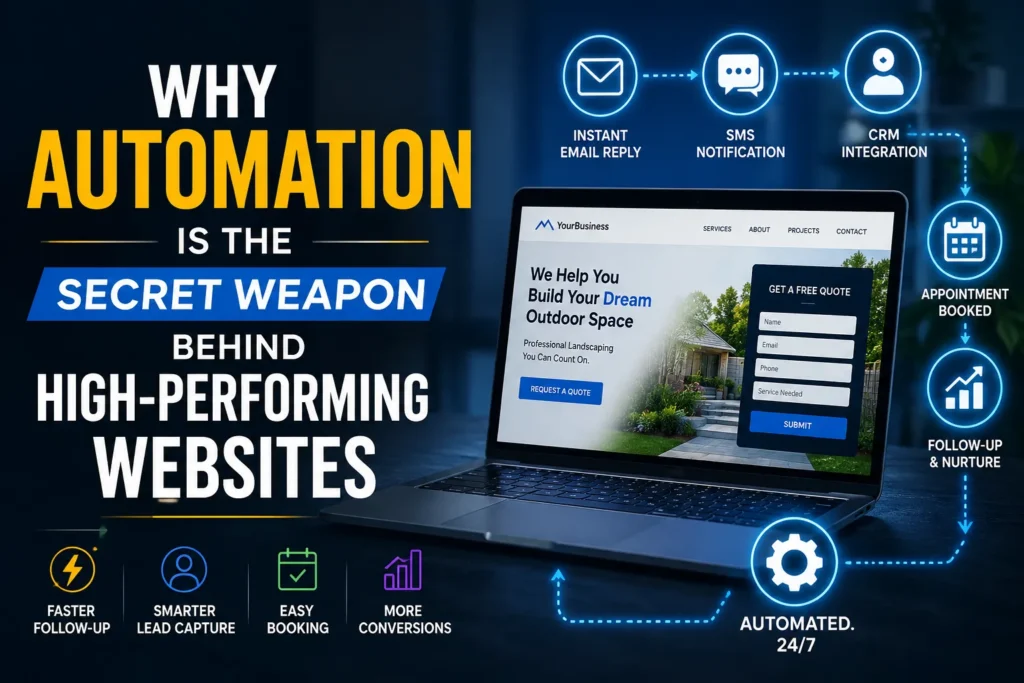

Most business websites look fine on the surface. Clean design, decent copy, a contact form that technically works. Yet the phone stays quiet. The difference between a website that just sits there and one that consistently brings in revenue usually comes down to one thing. Automation.
High-performing websites do not rely on someone manually checking an inbox, chasing leads, or updating content by hand. Instead, they run on automated systems that respond instantly, follow up relentlessly, and free the business owner to focus on actual work. In this post, we will break down exactly why website automation has become the secret weapon of businesses that win online, and how you can put it to work on your own site.
What Website Automation Actually Means
Website automation is the use of software to handle repetitive tasks on your site without human input. That includes things like sending an instant reply when someone fills out your contact form, routing new leads into your CRM, booking appointments directly on your calendar, and triggering follow-up email sequences.
In other words, your website stops being a digital brochure and starts acting like a full-time employee. One that never sleeps, never forgets to follow up, and never lets a lead go cold.
Speed to Lead: The Number One Reason Automation Wins
Here is the hard truth about online leads. They go cold fast. Research consistently shows that responding to a lead within the first five minutes dramatically increases your chances of converting them. Wait an hour, and most of that opportunity is gone.
No business owner can sit by their inbox all day. Automation solves this instantly. The moment a visitor submits a form, an automated workflow can send a personalized email, fire off a text message, notify your sales team on Slack, and add the lead to your pipeline. All within seconds.
That speed alone is often the difference between winning the job and losing it to a competitor who simply replied first.
Automated Lead Capture and Nurturing
Most website visitors are not ready to buy on their first visit. In fact, the majority will leave and never return unless you give them a reason to stay connected. This is where automated lead nurturing comes in.
A high-performing website uses tools like:
- Lead magnets and popups that capture emails in exchange for a guide, discount, or free quote
- Email drip sequences that educate prospects over days or weeks until they are ready to buy
- Chatbots and AI assistants that answer common questions and qualify leads around the clock
Each of these runs automatically. Once the system is built, it works every hour of every day, turning cold traffic into warm leads without you lifting a finger.
Booking and Scheduling Without the Back-and-Forth
Think about how many emails it takes to schedule a single appointment. Automation eliminates that entire dance. With scheduling tools embedded directly on your site, prospects pick a time that works, receive automatic confirmations and reminders, and show up ready to talk.
Automated reminders alone can cut no-show rates significantly. For service businesses, contractors, consultants, and agencies, that translates directly into recovered revenue.
Automation Keeps Your Website Fresh and Search-Friendly
Google rewards websites that stay active and up to date. However, manually updating content, publishing blog posts, and monitoring site health takes serious time. Automation helps here too.
Automated systems can schedule and publish blog content, share new posts to social media, monitor site uptime and broken links, and generate SEO reports. Some businesses even automate review collection, sending a request to every completed customer so fresh testimonials keep flowing onto the site.
The result is a website that stays alive and keeps climbing in search rankings, while your team focuses on serving clients.
Data That Actually Gets Used
Analytics only matter if someone acts on them. Automated reporting delivers key metrics like traffic, conversions, and lead sources straight to your inbox or dashboard on a schedule. Instead of digging through Google Analytics once a quarter, you see what is working every single week.
Better yet, automation can respond to data in real time. Abandoned a quote form halfway through? An automated email can bring that visitor back. Visited your pricing page three times? Your sales team gets an alert. These small, automatic responses compound into serious revenue over time.
Real-World Example: From Contact Form to Closed Deal
Picture a landscaping company with a standard website. A visitor requests a quote at 9 PM on a Saturday. On a non-automated site, that inquiry sits until Monday morning, by which point the homeowner has already heard back from two competitors.
Now picture the automated version. The form submission instantly triggers a confirmation email with a booking link, a text message thanking the prospect, and a CRM entry with the lead tagged by service type. On Sunday, an automated follow-up shares recent project photos and reviews. By Monday, the appointment is already booked.
Same website design. Completely different business outcome. That is the power of automation.
Getting Started with Website Automation
You do not need to automate everything at once. Start with the workflows that touch revenue directly:
- Instant lead response. Set up automatic email and SMS replies for every form submission.
- CRM integration. Make sure every lead lands in one organized pipeline automatically.
- Follow-up sequences. Build a simple three to five email nurture series for new leads.
- Online scheduling. Embed a booking tool so prospects can schedule without emailing you.
From there, you can layer in chatbots, review automation, content scheduling, and advanced reporting as your business grows.
Final Thoughts
A beautiful website without automation is like a storefront with no staff. It might attract attention, but nobody is there to close the sale. Automation is what transforms a website from an online placeholder into a high-performing sales asset that responds instantly, nurtures every lead, and works around the clock.
The businesses winning online right now are not necessarily the ones with the biggest budgets. They are the ones whose websites do the follow-up automatically, every single time.
Frequently Asked Questions
What is website automation?
Website automation uses software to handle repetitive tasks like lead follow-up, appointment booking, email nurturing, and reporting without manual work. It turns your website into an active sales tool instead of a static brochure.
Is website automation expensive?
Not anymore. Many powerful automation tools cost less per month than a single lost lead. Most small businesses can start with instant lead replies and CRM integration for a minimal investment.
Will automation make my business feel impersonal?
Done right, it does the opposite. Automation ensures every lead gets a fast, personalized response, which feels far better to customers than waiting days for a reply. The human touch comes in during the sales conversation, where it matters most.
Which tasks should I automate first?
Start with lead response and follow-up. Those two workflows have the most direct impact on revenue and are the easiest to set up on almost any website platform.